A Diplomatic Concession, or a Fire Quietly Extinguished?

Omotaje Emmanuel O.
20 May 20263 min read

The students' resolve, once unshakeable, faces its first test as the SRC steps back from the brink — at least for now.
Three days ago, on May 17, 2026, the Student Representative Council (SRC) held a congress where students' complaints were heard and formally addressed.
-
What were the complaints?
These complaints concern some of the most basic needs guaranteed under Nigerian law and the University's own code of conduct, yet they had gone unaddressed by management. This is especially striking given the University's vision statement, which includes an aspiration to be a world-class institution with a learning environment that fosters education.
The complaints encompassed the following:
i. Institutional health services were found to be lacking necessary medical supplies, and staff were verbally abusing patients.
-
ii. Hostel infrastructure and hygiene were poor, despite the hostels being funded through each student's fees. Facilities were left in bad condition despite multiple complaints, and the recurring behaviour of hostel porters treating university students as secondary school pupils was deemed unacceptable and inconsistent with the fees paid and the oath taken at matriculation.
-
iii. Transportation was hampered by outdated student ID cards, resulting in an increased risk of harassment while travelling and unnecessary delays at the school gate.
-
iv. Academic administration and grading malpractice, including results being mixed up or misplaced, trapping students in a cycle where they cannot access their transcripts. A disorganised attendance-marking system and the understaffing of lecturers were also highlighted.
-
v. Breach of the student code of conduct and human rights, specifically the imposition of a 10 p.m. curfew despite the standard being 11 p.m., alongside harassment and abuse of students by hostel porters.
-
All these complaints were compiled and formally submitted to management with a 48-hour ultimatum to respond. Campus life carried on as students awaited a reply.
-
What met them was silence. On May 19 at exactly 11 p.m., the SRC issued a memo titled "Declaration of Total Lecture Absenteeism" — meaning students would not attend any lectures on May 20 as a show of collective resolve. The memo was met with approval by students who had spent 48 hours waiting, only to be ignored.
-
Those who believed there would be no class that day slept without worry. Then, like a thief in the night, another memo arrived at exactly 6 a.m. on May 20. Its contents, in two words: diplomatic concessions.
The university administration had contacted the SRC, stating that the manner in which the strike memo was issued was improper — that complaints should have been routed through the Dean of Student Affairs (DSA) to the Vice Chancellor.
-
This is a striking claim, given that numerous past correspondences addressed directly to the Vice Chancellor were reportedly rejected by the same division on the grounds that students cannot address the Vice Chancellor directly.
-
A meeting between the university administration and the SRC has since been scheduled. As a result, lectures will proceed today. The SRC, however, stated that no quizzes, tests, or assessments may be held, and urged students to keep their resolve firm — describing this as a diplomatic concession made out of respect for the negotiations ahead.
-
Many students expressed concern that lecturers may use the opportunity to retaliate — assigning assessments in response to the expressions of disapproval directed at management.
-
The SRC's public relations officer acknowledged these reactions but characterised them as emotional, a framing that has itself drawn criticism.
-----------------------------------------------------------------
Is this truly a diplomatic concession — or merely the extinguishing of a fire that threatened to grow too large for management to ignore?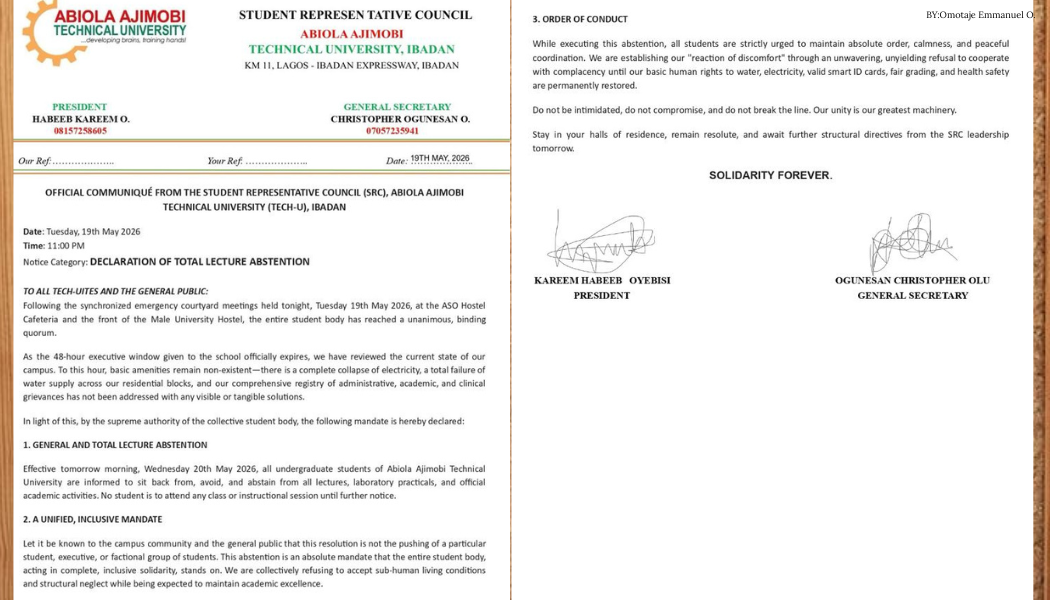
Enjoyed this story?
Tap to show the newsroom some love — you can clap as much as you like.