
Current Trends in the World of Artificial Intelligence

Odutola Dorcas P.
22 January 20263 min read
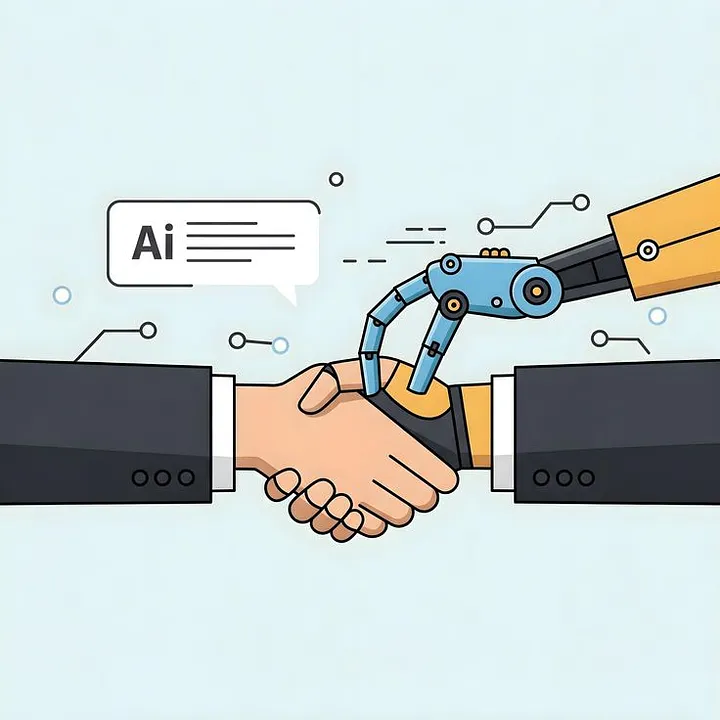
Artificial Intelligence has evolved from a distant promise into an indispensable reality. In 2026, AI isn’t just changing how we work — it’s redefining what’s possible across every industry. From autonomous systems managing global supply chains to AI co-scientists accelerating drug discovery, the technology has matured into a functional digital partner that’s reshaping our world in real time.
This is Part 1 of our AI landscape series, where we explore the major trends transforming the technology itself. In Part 2, we’ll examine which companies are leading the charge and why it matters for your business decisions.
In 2026, the landscape of Artificial Intelligence has transitioned from an experimental curiosity into a functional digital partner across global industries. AI is no longer seen as a futuristic concept but as a practical tool deeply integrated into everyday operations.
One major trend is the shift from simple chatbots to AI agents. These are specialized systems designed for specific industries. For example, logistics AI agents can reroute ships based on real-time weather data, improving efficiency and reducing risks.
AI models are also no longer limited to text. By 2026, there has been widespread adoption of multimodal interfaces that process voice, images, video, and sound simultaneously. Users can explain a problem to an AI while showing a video at the same time. In addition, AI systems now use satellite feeds and public records to predict climate-related infrastructure risks.
Another important development is that AI is becoming increasingly invisible. Small, low-power AI chips are being embedded directly into hardware. These chips are now found in smartphones and medical devices, allowing data to be processed locally without constant access to centralized cloud systems, thereby enhancing privacy and reducing latency.
As AI becomes essential to critical infrastructure, global focus has shifted toward regulation and national security. Many countries are investing in sovereign clouds to ensure that sensitive data and AI workloads remain within their physical borders and align with national interests.
There is also a strong emphasis on Green AI. New data centers are being designed using near-zero carbon materials and powered by carbon-free energy sources, reducing the environmental impact of large-scale AI systems.
In scientific research, AI has become a co-scientist in many laboratories. It assists researchers by suggesting new experiments, generating hypotheses, running simulations, and controlling automated lab equipment to test results. Significant progress has been made in protein design and drug discovery, with many breakthroughs now reaching real-world clinical applications.
These are just a few examples of the many developments in Artificial Intelligence. There are numerous types of AI, each contributing in its own way to improving human life and advancing global progress.
These developments represent more than incremental improvements — they signal AI’s transition from a supporting tool to a foundational infrastructure of modern society. As these trends accelerate, understanding who’s driving them becomes crucial for anyone looking to leverage AI strategically.
Next in this series: Discover which tech giants are dominating different AI domains and why no single company is winning alone in “Current Trends in AI: Who Is Winning?”
Enjoyed this story?
Tap to show the newsroom some love — you can clap as much as you like.