
From Ibadan to Berlin: Tech-U Alumni Secure International Grant for AI Health Startup

Johnson Olaniyan
20 February 20268 min read
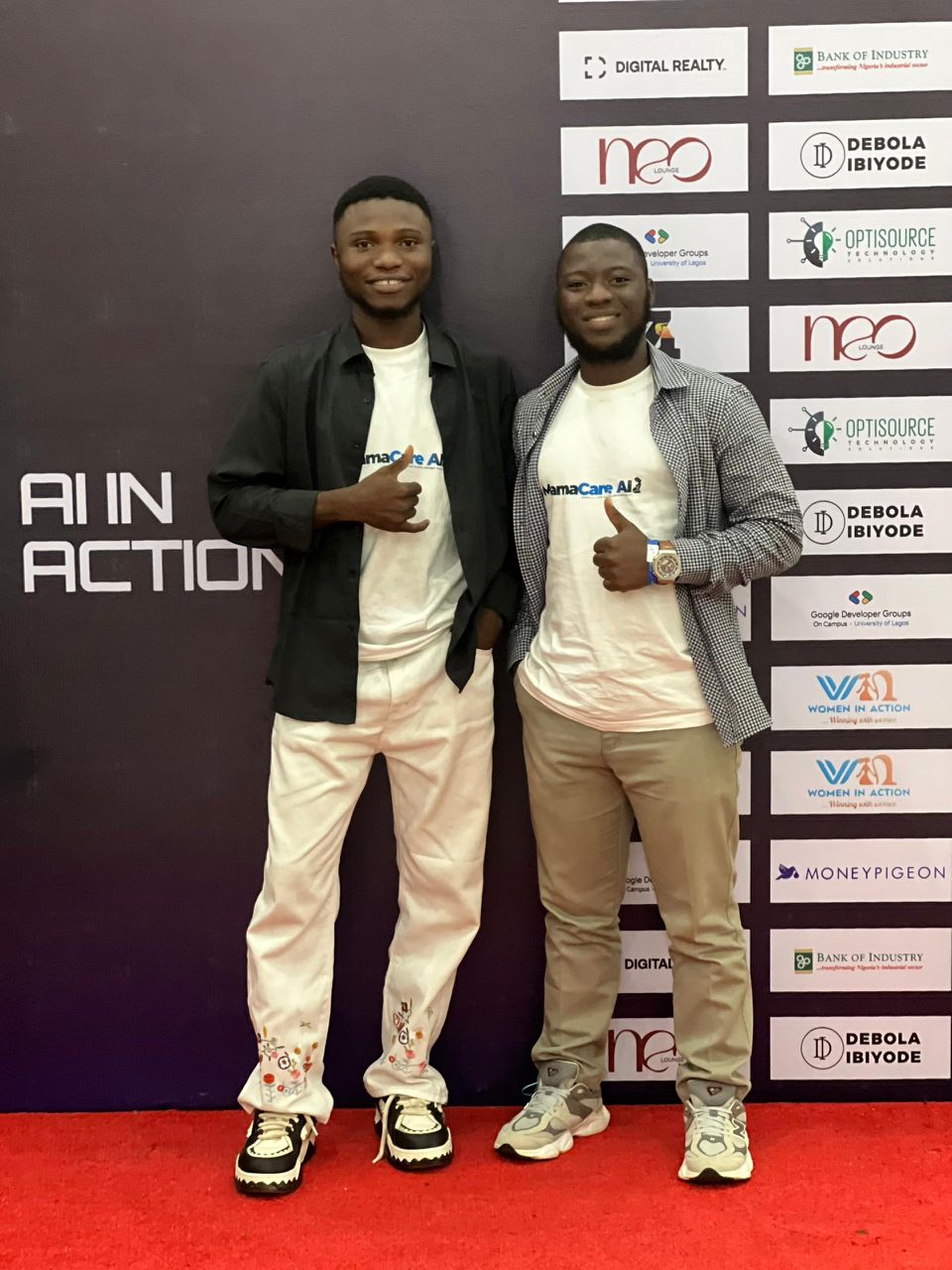
For the millions of Nigerian women who face life-threatening complications during pregnancy, hope is getting a technological boost. A team of innovators led by Oguntola Usman Adewale, a Computer Science graduate of Abiola Ajimobi Technical University, is taking their AI-powered maternal health solution, MamaCare AI, to Germany after winning an international travel grant to scale their life-saving innovation.
MamaCare AI emerged in second place at the Pitch Your Start-Up Innovative Tech Idea Program, organized by the African Youth Enlightenment, Empowerment, Self-Sustainability Initiative (AYEESSI). The win earned them a fully sponsored international travel grant to Germany, marking a significant milestone in their journey to reduce maternal mortality through artificial intelligence.
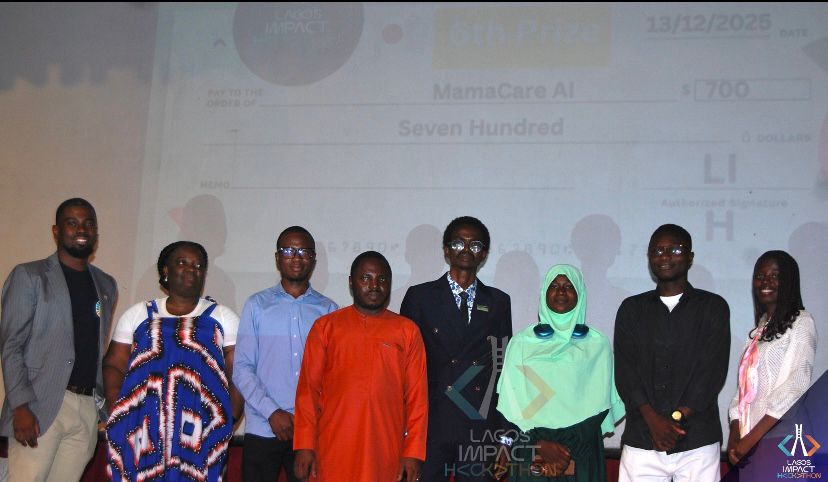
This achievement follows closely on the heels of a 7-figure cash prize the team won at the University of Lagos, where they competed against about 65 strong teams. These back-to-back wins have validated the potential of MamaCare AI to transform maternal healthcare delivery, particularly in underserved communities.
MamaCare AI is an AI-driven maternal health solution focused on early risk prediction for pregnant women. The system uses artificial intelligence to detect potential complications such as hypertension and preeclampsia early, and is designed to function even in low-resource environments through SMS and offline accessibility. It includes dashboards for mothers, healthcare providers, and government agencies to improve maternal care monitoring and decision-making.
The leadership team bringing this vision to life comprises Oguntola Usman Adewale (Co-founder and CEO, Computer Science graduate, Abiola Ajimobi Technical University), Engr. Olowookere AbdulQoyum Adegoke (Co-founder and CEO, Petroleum Engineering graduate, Abiola Ajimobi Technical University), and Oyeniran Fateemah Toyosi (Co-founder and CEO, Computer Science graduate, Yaba College of Technology).
Speaking about the grant, Oguntola described the recognition as humbling and motivating for the team. He noted that beyond the opportunity to travel to Germany, the grant provides valuable exposure to international health and technology ecosystems, access to potential partnerships, and a platform to strengthen their credibility as a scalable health-tech solution.
The team is also working on another innovation, SEWOS (Smart Electrical Wiring Optimization System), an AI-powered platform that improves how electrical wiring is designed and monitored in buildings. The system currently has a minimum viable product (MVP) and includes predictive monitoring capabilities that can detect abnormal patterns before they escalate into fires or system failures.
In an interview with THE STING (TechU) Press, Oguntola shared insights into the journey of building MamaCare AI, the challenges faced, and lessons for the student community. Read the full transcript below:
THE STING: Kindly introduce yourself.
Oguntola: I am OGUNTOLA Usman Adewale, an AI/ML engineer passionate about leveraging artificial intelligence to solve real-world problems, particularly in healthcare and underserved communities. As the Co-Founder & CEO of MamaCare AI, I lead the vision and technical development of an AI-driven maternal health solution focused on early risk prediction and reducing preventable maternal mortality. My work centers on building innovative, accessible, and impact-driven technology that not only advances digital health in Africa but also creates sustainable solutions with global relevance.
THE STING: We heard about your recent win. Kindly share your story.
Oguntola: Recently, Team MamaCare AI achieved two major milestones that have significantly strengthened our journey. We first won a 7-figure cash prize at the University of Lagos after competing against about 65 strong teams, which was a powerful validation of our solution's impact and scalability in maternal healthcare. Shortly after, we emerged in 2nd place at the Pitch Your Start-Up Innovative Tech Idea Program organized by AYEESSI, where we were awarded a fully sponsored international travel grant to Germany. These recognitions not only provide financial and international exposure support but also affirm that our mission to reduce maternal mortality through AI-driven early risk prediction is gaining meaningful attention both locally and globally.
THE STING: Tell us about the company, the product, and the problem it's solving.
Oguntola: MamaCare AI is a maternal health innovation focused on early risk prediction for pregnant women, especially in underserved and rural communities. We use artificial intelligence to help detect potential risks such as hypertension and preeclampsia early. The system is designed to work even in low-resource environments through SMS and offline accessibility. It also includes dashboards for mothers, healthcare providers, and government agencies to improve maternal care monitoring and decision-making. Our goal is simple: reduce maternal mortality through early detection and intelligent support systems.
THE STING: Can you tell us how this journey started? The story of how MamaCare AI came to be.
Oguntola: Maternal mortality remains a serious global challenge. According to global health reports, about 260,000 women die each year from pregnancy or childbirth-related complications, that's almost one woman every two minutes, and most of these deaths are preventable. Over 90% of these deaths occur in low and middle-income countries, with sub-Saharan Africa carrying the highest burden. In Nigeria, the situation is even more alarming, as the country accounts for a significant percentage of global maternal deaths. Many of these cases are linked to complications like hypertension and preeclampsia that could be detected earlier with proper monitoring and timely intervention. These statistics are not just numbers to us; they represent real lives. That urgency is exactly why we built MamaCare AI: to use predictive technology to identify risks early, support healthcare providers, and help reduce preventable maternal deaths in our communities.
THE STING: What challenges have you faced so far with your product?
Oguntola: One of the major challenges we've faced is access to high-quality, structured maternal health data for training and validating our predictive models. In many low-resource settings, medical records are not fully digitized, which makes data collection and model refinement more complex. Since accurate AI systems depend heavily on reliable datasets, we've had to be strategic in how we gather, validate, and structure our data. Another challenge has been designing the solution to function effectively in low-connectivity environments. Many of the communities we serve have limited internet access, so we engineered MamaCare AI to support offline and SMS-based functionality without compromising performance. As we expand into hardware innovation with the MamaCare SmartWatch, we are also navigating the complexities of integrating wearable vital-sign monitoring with our predictive AI system in a way that remains affordable, scalable, and suitable for underserved communities. Like many health-tech startups, we also face regulatory considerations, funding constraints, and the responsibility of ensuring clinical safety and accuracy. However, these challenges have strengthened our commitment to building a solution that is not only innovative but reliable, accessible, and truly life-saving.
THE STING: Do you have any other products you are currently working on?
Oguntola: Yes, SEWOS, the Smart Electrical Wiring Optimization System.
THE STING: Interesting, can you tell us about it and what stage that is?
Oguntola: SEWOS, the Smart Electrical Wiring Optimization System, is an AI-powered, physics-informed platform that improves how electrical wiring is designed and monitored in buildings. Instead of relying on manual layout decisions, SEWOS converts building plans into a computational model and automatically optimizes distribution board placement and cable routing using graph algorithms. This reduces copper usage, minimizes energy losses, and ensures safety compliance through electrical physics validation. Beyond design, SEWOS introduces predictive monitoring. By analyzing electrical behavior in real time, it can detect abnormal patterns such as arc-fault precursors before they escalate into fires or system failures. In simple terms, SEWOS shifts electrical infrastructure from reactive protection to proactive prevention. We currently have an MVP. From this work, I proposed a theory in electrical safety.
THE STING: Can you share some lessons you have picked from your journey so far that could be useful to the student community?
Oguntola: One major lesson I have learned is the importance of building a strong community where students can freely share ideas, collaborate, and consistently build in public. Innovation grows faster in communities, not in isolation. I have always wanted to establish something like this within NACOS, but unfortunately, I was not able to fully achieve that vision. For that, I sincerely apologize. It was not due to lack of intention, but the challenge of assembling a strong, committed team to drive it forward. I strongly believe there are brilliant minds in Tech-U, students who have the capacity to think deeply and build impactful solutions. My advice to the student community is to start thinking beyond just passing exams. Focus on solving real problems around you while balancing your academics with practical skills. The future belongs to problem solvers. I remain open to mentorship, collaboration, and supporting students who are ready to build and grow.
THE STING: What can you say to students who have innovative ideas but are held back due to a lack of funds to kickstart their project and Is Nigeria still supporting local startups?
Oguntola: Build a strong team, start building in public, and focus on showing real progress. Nigeria is increasingly ready to support local innovators through grants, hubs, and competitions; however, you must present evidence of traction and a measurable impact to attract that support. So yes, Nigeria supports local startups.
With the German grant now secured and momentum building rapidly, Team MamaCare AI is positioned for its next phase of growth. The international exposure, partnerships, and insights from Germany will undoubtedly sharpen their edge as they work toward scaling their solution across Nigeria and Africa.
Follow us for more updates.
Enjoyed this story?
Tap to show the newsroom some love — you can clap as much as you like.