
Sixty-five years after freedom, the Giant of Africa still kneels under its own chains.
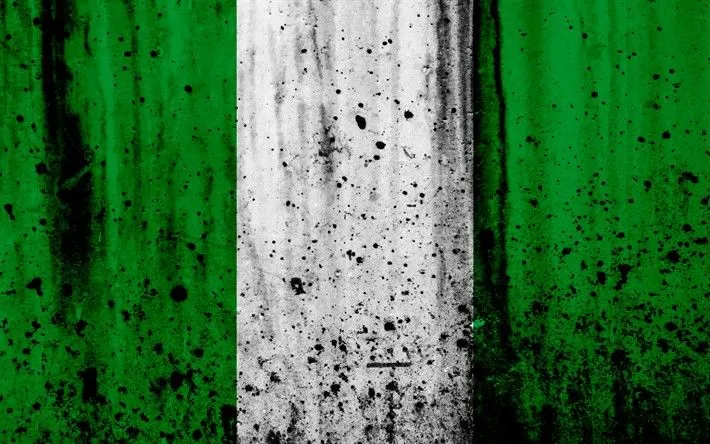
The calendar flips, and what lies boldly written is October 1, 2025. Quite the first day of the 10th month, yet this date carries more weight for me as an inscriber and as a Nigerian. Today, my country marks its 65th anniversary of independence — a freedom won from foreign oppressors.
But though this day is meant to signify liberty and celebration, the reality outside my door tells another story. Instead of the fragrance of freedom, I smell the stench of captivity — an erosion of will and hope in the hearts of the people. Once hailed as the Giant of Africa, a nation whose promise could rival the USA, Russia, and others. Nigeria has stumbled, its throne of promise crumbling into dust.
Our story in recent years has been one of decline. What was once Africa’s third-largest economy now stumbles under the weight of inflation. A country whose defense appears nonexistent, where citizens are slaughtered even in their own homes. A land where leaders paint our name black before the world — squandering public funds, enriching themselves while education decays, and children read by candlelight to sit for exams.
On paper, bills are passed daily to repair or build new roads. Yet in reality, 70% of our roads lie broken. Our youth flee abroad in search of greener pastures (japa), estranged from a homeland that no longer feels like home. We boast of independence, yet in truth, we depend almost solely on crude oil — our once-diverse economy reduced to fragility.
And what of leadership? Nigeria once bred a man like Abubakar Tafawa Balewa, our first Prime Minister, internationally respected for his oratory and diplomacy, knighted by Queen Elizabeth II and fondly remembered as the Golden Voice of Africa. We produced Ngozi Okonjo-Iweala, the first woman and African to lead the World Trade Organization. Yet today, what lies supreme is a man whose words sound sweet but whose actions bring catastrophe. Policies that crush the common man. Certificates clouded in controversy. An office occupied by a leader many never truly voted for.
We have witnessed the courage of our youth, who once marched with banners inscribed End SARS, demanding their right to safety. Yet freedom of speech did not guarantee freedom after speech. The government that should have protected them sent armed men to fire upon them. Lives were lost, and a generation scarred. To this day, the trauma lingers.
Democracy in Nigeria is democracy in name only. We come out to vote, yet once the victor ascends to power, our voices are drowned. His will replaces ours, and we remain bound beneath his rule.
Then there is the overspirituality of this land. More churches than schools, more prayer vigils than hospitals. We are quick to pray over everything but slow to act on anything. Faith without works has become our undoing.
Even in our schools — those supposed factories of freedom often teach silence instead. Students bribe lecturers for grades. Those who protest face harsher rules instead of reform. “No signing out in university,” they decree — treating students like criminals for wanting freedom. Universities enforce dress codes and curfews, yet some lecturers prey on the very students they should protect. If the root is rotten, how can the fruit be good?
Yet, I still cling to hope. Hope that one day Nigeria will rise, not because of its leaders, but because of its people — resilient, creative, unbroken. Hope that the Giant of Africa will not remain fallen forever.
Until then, I mourn, I write, and I pray — not just with lips, but with ink that insists on truth.
Enjoyed this story?
Tap to show the newsroom some love — you can clap as much as you like.